Garage floors face constant pressure from parked vehicles, heated tires, rolling cabinets, oil drips, yard equipment, storage shelves, gritty debris, and repeated foot traffic. The benefits of epoxy flooring for garage floors include added surface protection, easier upkeep, flexible appearance choices, and a sealed layer that helps separate concrete from much of the daily wear found inside an active garage. Homeowners should also weigh installation cost, moisture conditions, existing concrete damage, preparation requirements, and expected lifespan because each factor can affect how the finished coating performs several years later. “Homeowners often look at color first, but the condition of the concrete underneath usually has a much greater effect on how the finished floor performs,” a representative of Optima Concrete Coatings said.
- Garage activity should help determine which coating system is appropriate.
- Concrete condition can influence adhesion and long-term performance.
- Surface preparation deserves as much attention as the finished appearance.
- Moisture, cracks, and contamination should be identified before coating begins.
1. Epoxy Garage Floor Benefits
Epoxy garage flooring develops a firm cured layer over correctly prepared concrete, creating a working surface that takes much of the contact that would otherwise reach the slab itself. An aging garage might have dark tire paths, oil discoloration, small chips, dusty patches, and worn areas even though the concrete remains serviceable, and covering that surface can help limit additional wear while giving the garage a more consistent finish. Installers commonly prepare concrete mechanically so coatings can bond to a clean surface rather than adhering to dirt, weak cement paste, paint, oil residue, or another material that may eventually release. Thorough preparation becomes especially useful for homeowners who regularly park vehicles, roll equipment across the floor, store heavy items, or use the garage as a workshop.
- Cured epoxy creates a firmer layer above prepared concrete.
- Mechanical preparation helps remove weak material and surface contamination.
- Cracks and damaged areas may require repairs before installation.
- Vehicle traffic and workshop activity should influence coating selection.
- The condition below the coating can affect how long the finished system lasts.
2. Greater Concrete Protection
Concrete feels remarkably hard, yet its exposed upper layer can slowly deteriorate under vehicle tires, rolling tool chests, lawn machines, dropped equipment, metal stands, and abrasive particles carried indoors. Epoxy flooring places a continuous barrier above the slab, allowing the coating to take much of the ordinary friction and light abrasion instead of leaving bare concrete directly exposed to every movement. Technical information for professional epoxy floor coatings describes resinous systems that develop strong adhesion to properly prepared concrete and are intended for floors subject to ongoing use. Serious cracking, moving joints, extensive spalling, or structural movement still needs separate evaluation because a coating protects a surface but cannot stabilize a failing slab underneath it.
- Epoxy limits direct abrasion against exposed concrete.
- Rolling cabinets and storage equipment contact the coating rather than the slab.
- Damaged areas may require patching before installation proceeds.
- Structural movement cannot be corrected simply by covering the floor.
- Proper bonding is closely tied to the quality of concrete preparation.
3. Simpler Garage Cleaning
Bare concrete contains pores, pits, and small texture variations that can trap road dust, grass, mud, grease, salt, oil, and other residue, which is why an unfinished garage floor can remain dirty even after repeated sweeping. Epoxy produces a smoother and less absorbent surface that can typically be swept, vacuumed, or damp-mopped more easily, while liquid spills tend to remain visible rather than disappearing quickly into porous concrete. Garage floor maintenance guidance from Angi recommends removing accumulated debris because gritty material can scratch coated flooring when tires and shoes repeatedly drag it across the surface. Consistent cleaning also gives homeowners an opportunity to spot worn areas, chips, scratches, or chemical residue before a small maintenance issue becomes harder to address.
- Smoother flooring can make everyday sweeping less labor intensive.
- Spills are usually easier to identify on a coated surface.
- Removing sand and road grit can limit avoidable scratching.
- Regular cleaning can help preserve gloss and surface texture.
- Routine inspection makes developing wear easier to notice.
4. More Garage Design Choices
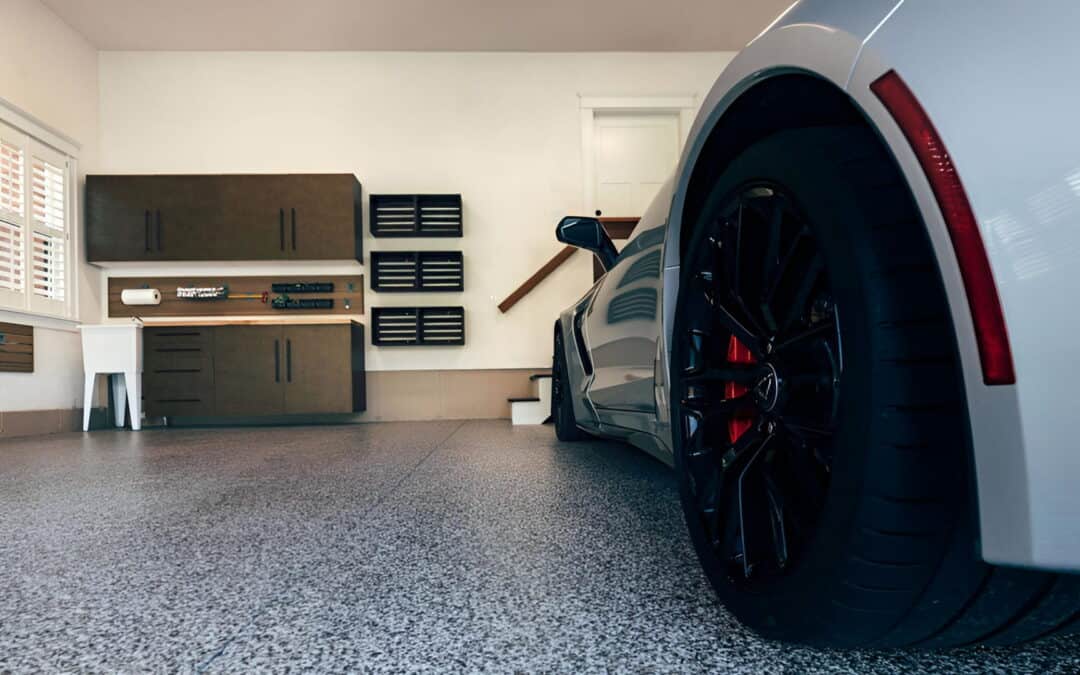
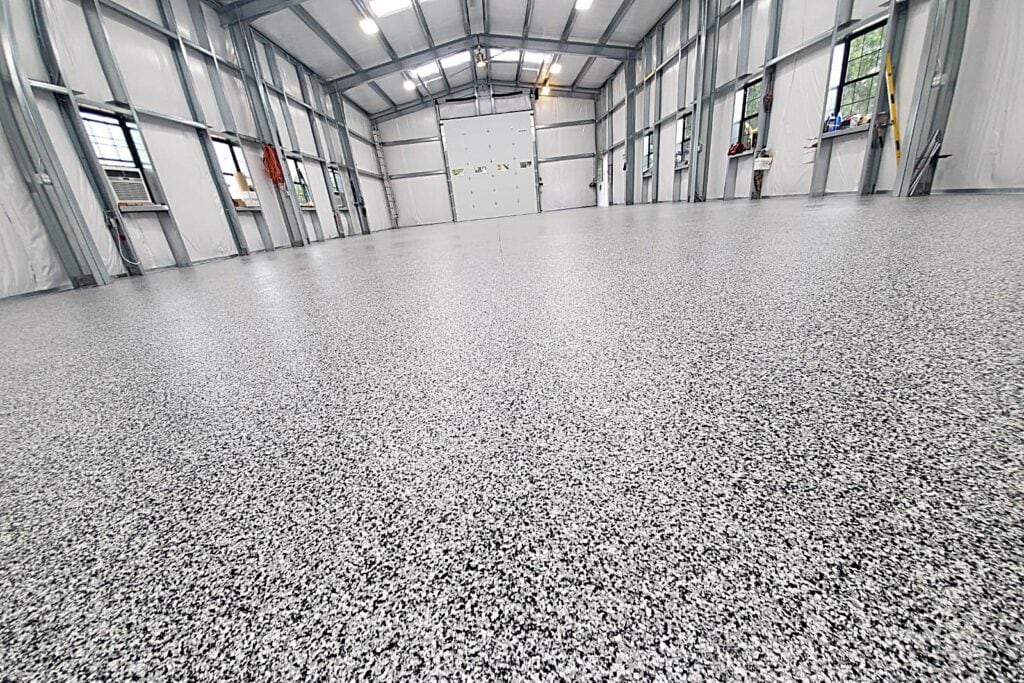
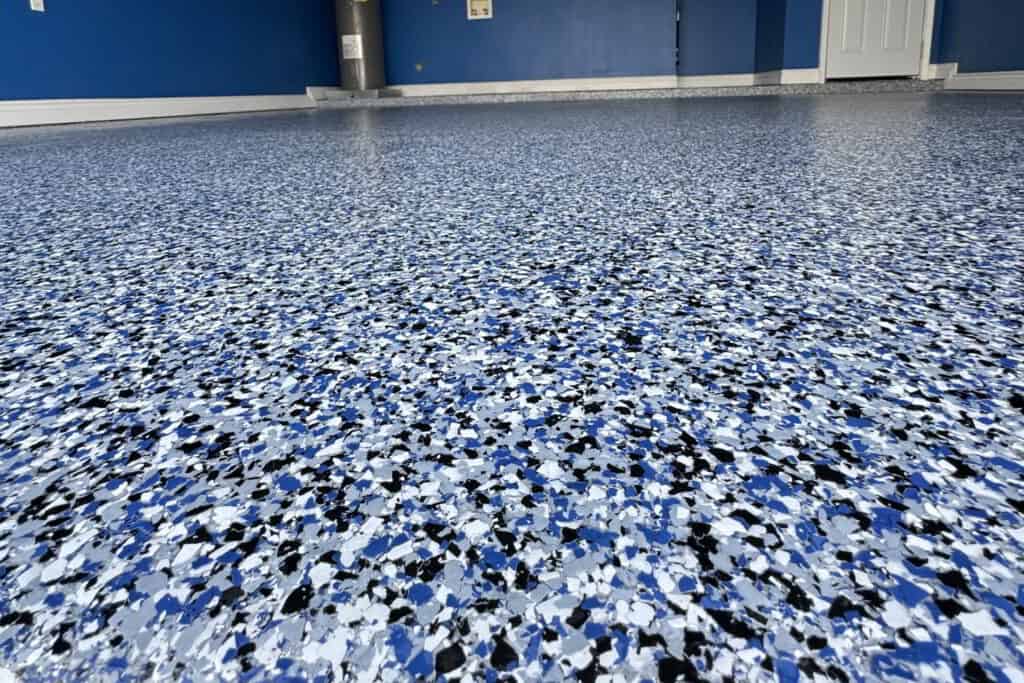
Garage concrete does not have to stay unfinished gray simply because the room stores vehicles, tools, and household equipment. Decorative flakes, solid colors, quartz systems, metallic effects, different gloss levels, and textured surfaces give homeowners several ways to coordinate the floor with shelving, cabinetry, wall finishes, workbenches, or storage systems without sacrificing practical use. Optima Concrete Coatings lists flake, quartz, metallic, and other decorative systems among its options for concrete surfaces. Multicolored or patterned finishes may also hide small scuffs, light dust, footprints, and tiny marks better than a uniform high-gloss color that shows nearly everything resting on its surface.
- Decorative flakes break up large areas of a single color.
- Solid finishes create a cleaner and more uniform appearance.
- Metallic systems produce more varied visual movement.
- Quartz can provide added texture along with decorative variation.
- Color and pattern affect how readily dirt and everyday marks are seen.
5. Improved Stain Resistance
Motor oil, grease, muddy runoff, fertilizers, lawn products, automotive liquids, and other garage materials can soak into untreated concrete because the slab naturally contains pores that absorb liquids. A correctly cured epoxy coating provides a less absorbent barrier, giving homeowners additional time to remove many spills before they penetrate deeply and create stubborn discoloration that can be difficult to remove later. Technical testing for professional epoxy flooring systems documents resistance to numerous substances, although performance varies according to the formulation, chemical involved, concentration, temperature, and length of exposure. Prompt cleanup remains sensible because solvents, gasoline, acids, and other harsh substances can still dull, discolor, soften, or damage certain coating systems when they remain on the floor too long.
- Oil is less likely to penetrate coated concrete immediately.
- Chemical resistance varies among epoxy products and formulations.
- Longer exposure can increase the possibility of staining or damage.
- Quick cleanup can help preserve the coating’s appearance.
- Homeowners should check product guidance before using strong cleaners.
6. Garage Floor Suitability
Epoxy flooring is suitable for many garage floors, but concrete should be evaluated before anyone assumes that a coating can simply be rolled over the existing surface. Contractors may need to identify moisture movement, cracks, deteriorated areas, oil contamination, previous paint, sealers, patching compounds, or older coatings because these conditions can prevent a new system from bonding correctly. Concrete moisture guidance from Sika explains that moisture testing and substrate evaluation can be important before resinous flooring is installed. Homeowners may find that two garages with identical square footage require very different preparation because one slab is clean and dry while the other has years of oil exposure, repairs, moisture, and previous coatings.
- Moisture levels can influence coating and primer selection.
- Cracks may need filling or other repairs before coating begins.
- Oil contamination can prevent reliable adhesion.
- Older paint and sealers may require mechanical removal.
- Deteriorated concrete may need more extensive surface preparation.
7. Epoxy Flooring Cost
Epoxy flooring cost can differ substantially from one garage to another because square footage represents only one part of the work required. Current 2026 figures from Angi’s epoxy flooring cost guide place professional installation at roughly $2 to $12 per square foot, including labor and materials, while concrete condition, coating type, preparation, repairs, and decorative treatments can change the final total. A relatively clean garage may need straightforward grinding and coating, while another floor of the same size could require crack repair, old coating removal, oil treatment, moisture management, detailed edge work, and several coating layers, creating a much different labor requirement. Homeowners comparing prices should examine what preparation, repairs, coating layers, decorative materials, curing procedures, and warranty terms are actually included rather than relying on a single square-foot figure.
- Professional installation may cost roughly $2 to $12 per square foot.
- Extensive crack repair can increase labor and material expenses.
- Removing old paint or coatings may add significant preparation work.
- Decorative flakes and specialty systems can affect the overall price.
- Detailed written estimates make similar coating systems easier to compare.
8. Epoxy Floor Lifespan
Epoxy floor lifespan depends on product quality, concrete preparation, vehicle traffic, moisture, sunlight, maintenance habits, coating thickness, and the type of activity taking place in the garage. Angi reports that epoxy flooring can last roughly 10 to 20 years depending on the material and frequency of use, although thin coatings, improper preparation, moisture issues, or unusually hard use can shorten that service period. A garage used to park one commuter vehicle will create different wear than a busy workshop where steel carts move daily, tools are dropped, chemicals are handled, and heavy equipment rests on the floor. Peeling edges, widespread scratches, exposed concrete, bubbles, soft spots, fading, or areas separating from the slab can signal that repair or recoating should be considered.
- Some properly installed epoxy floors may last 10 to 20 years.
- Intensive workshop activity can shorten the useful lifespan.
- Moisture beneath the coating may contribute to adhesion problems.
- Keeping abrasive debris off the floor can reduce unnecessary wear.
- Early attention to peeling or bubbling may limit larger damaged areas.
9. Reduced Concrete Dust
Exposed concrete can shed fine particles as the surface ages and wears, while mechanical grinding during preparation can release much greater quantities of airborne dust when appropriate collection equipment is not used. NIOSH research on concrete grinding found that local exhaust systems attached to grinders reduced worker dust exposure by at least 90% during the grinding operations studied, illustrating the value of controlling dust while the slab is being prepared. A cured coating covers the exposed concrete once preparation is complete, reducing direct abrasion against the slab during normal garage activity and limiting the loose surface dust commonly associated with aging unfinished concrete. Homeowners who keep tools, sporting goods, holiday decorations, exercise equipment, hobby supplies, or stored household items in the garage may particularly appreciate a surface that does not continually shed concrete dust nearby.
- Mechanical grinding can generate considerable airborne concrete dust.
- Professional extraction equipment can control much of that dust during preparation.
- A cured coating separates normal traffic from the exposed slab surface.
- Reduced surface dust can make stored belongings easier to keep clean.
- Workshops and hobby areas can also benefit from a more contained floor surface.
10. Long Term Garage Value
Garage flooring becomes more worthwhile when multiple practical advantages operate together, including concrete protection, easier cleaning, stain resistance, visual consistency, and a service life that can extend for years under favorable conditions. Homeowners who park several vehicles, repair equipment, store tools, move carts, work on hobbies, or treat the garage as another usable part of the home may notice those advantages more frequently because the floor is constantly part of their routine. Safety deserves equal consideration during installation because the CDC and NIOSH explain that uncured epoxy components can present exposure hazards, while cured epoxy and resin products are generally safer to handle. Careful ventilation, protective equipment, accurate mixing, proper curing, suitable preparation, and sensible maintenance can all affect how the completed surface looks and performs years after installation.
- Frequent garage use can make surface protection more meaningful.
- Uncured epoxy requires suitable handling precautions.
- Vehicle traffic should wait until the required curing period has passed.
- Routine maintenance can help preserve appearance and performance.
- Long-term value depends on preparation as well as the coating itself.
Choosing Garage Epoxy
Epoxy flooring for garage floors makes the most sense when homeowners consider the coating and underlying concrete as a complete system rather than treating the visible finish as the entire project. Cost can differ significantly, lifespan may extend for a decade or longer, and durability depends on preparation, moisture conditions, coating chemistry, traffic, sunlight, temperature, cleaning habits, and the condition of the slab before work starts. Decorative flakes and color may be the first things people notice, yet grinding, cleaning, crack repair, moisture evaluation, primer selection, coating thickness, texture, and sufficient curing often have greater influence on whether the surface stays securely bonded. Homeowners who compare slab condition, expected garage activity, required maintenance, installation details, and projected lifespan can make a more informed decision about whether epoxy fits the way their garage is actually used.
- Consider concrete preparation and coating quality together.
- Compare initial installation expense with expected service life.
- Choose a system that matches normal garage activity.
- Identify moisture and existing slab damage before installation.
- Check exactly what preparation is included in competing estimates.
Epoxy Garage Floor Takeaways
- Epoxy can shield garage concrete from abrasion, stains, vehicle traffic, and common household wear.
- Professional epoxy flooring commonly costs about $2 to $12 per square foot based on current national estimates.
- Some professionally installed epoxy floors may last roughly 10 to 20 years under suitable conditions.
- Moisture, cracks, oil contamination, weak concrete, and previous coatings should be evaluated before installation.
- Mechanical surface preparation can strongly influence coating adhesion and lifespan.
- Flake, solid-color, quartz, metallic, and textured systems provide several appearance choices.
FAQs
Is Epoxy Suitable for Garage Floors?
Epoxy is suitable for many structurally sound concrete garage floors when moisture, contamination, cracks, deterioration, and old coatings are properly addressed before installation. Some slabs may need grinding, patching, crack repair, moisture treatment, oil removal, or complete removal of a previous finish before the new system can form a dependable bond. A detailed floor evaluation can reveal those conditions before coating begins and help determine which preparation steps match the slab and the way the garage will normally be used.
How Long Does Garage Epoxy Last?
A professionally installed epoxy floor may last roughly 10 to 20 years, although the actual lifespan can vary widely between garages. Vehicle traffic, direct sunlight, moisture, abrasive dirt, preparation quality, coating thickness, rolling equipment, dropped tools, chemical exposure, and cleaning habits all affect how quickly a surface shows wear. Sound preparation and consistent maintenance can improve the likelihood that a coating remains useful toward the longer end of its expected lifespan.
How Much Does Garage Epoxy Cost?
Professional epoxy flooring commonly costs about $2 to $12 per square foot according to current national estimates, but the total price depends heavily on what must happen before the coating is applied. Garage dimensions, concrete repairs, grinding requirements, old coating removal, moisture conditions, decorative materials, coating layers, edge work, and labor can all change the project total. Homeowners comparing estimates should review the scope of preparation and the complete coating system so a low price is not being compared with a more detailed installation that includes repairs and additional layers.
Why Does Epoxy Flooring Peel?
Epoxy flooring may peel when the coating loses adhesion to the concrete underneath, and the visible peeling is often only the symptom of a deeper preparation or moisture problem. Moisture vapor, oil residue, weak concrete, inadequate grinding, dust left behind after preparation, incompatible previous coatings, or incorrect application can all interfere with bonding. Finding and correcting the cause is important because applying another coating directly over a failed area may hide the problem temporarily while leaving the conditions that caused the original failure unchanged.
Can Epoxy Garage Floors Handle Cars?
Garage epoxy systems are commonly used on concrete surfaces that receive regular residential vehicle traffic, but the finished floor needs sufficient curing time before cars are driven or parked on it. Coating chemistry, preparation quality, tire temperature, abrasive road debris, vehicle weight, curing conditions, and maintenance practices all affect how the system responds to repeated use. Homeowners should follow the coating manufacturer’s stated curing schedule because a newly coated surface may feel dry to the touch before the material has developed enough hardness for vehicle traffic.

Louisiana News Post provides expert advice on home and garden services like gardening, landscaping, hardscaping, renovating, remodeling, roofing, HVAC, and interior design to help readers create their dream spaces. Their practical tips and creative solutions are inspired by years of hands-on experience and a commitment to affordable living. Whether you’re a seasoned handyman or just starting to explore home improvement, Louisiana News Post’s articles are a reliable resource for innovative ideas and detailed guidance.