
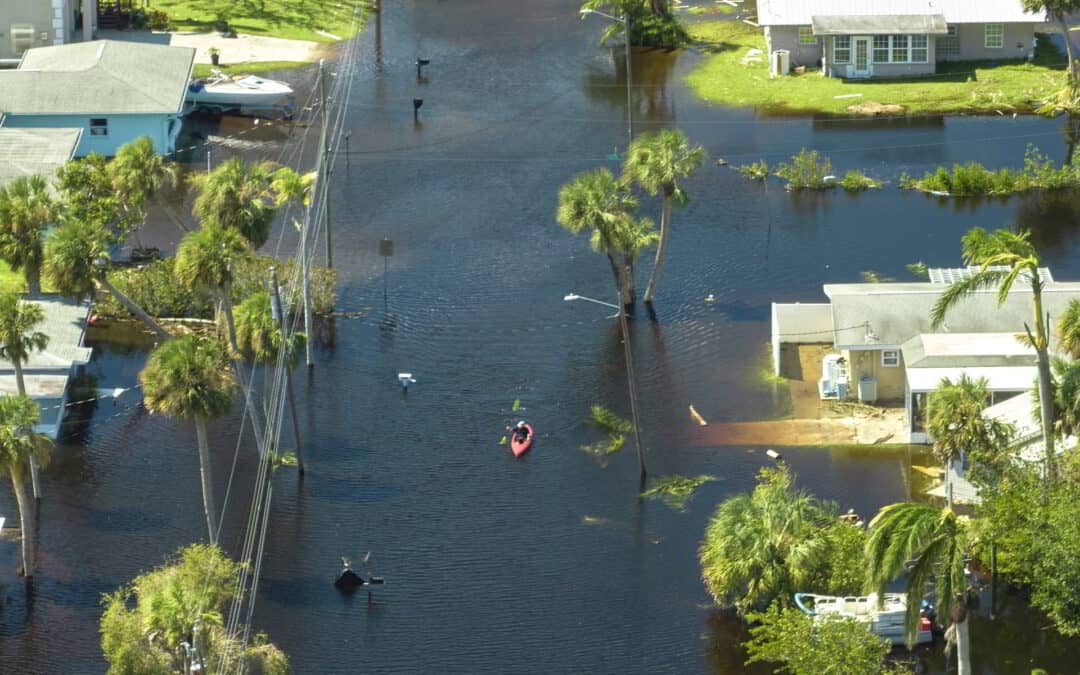
Flood Insurance exists to protect homeowners from one of the most widespread and financially destructive natural events in the United States, yet many property owners still misunderstand how it works. A reliable guide to navigating flood insurance begins with recognizing that rising water damage is usually excluded from standard homeowners insurance policies, even when powerful storms create the flooding. Flood insurance works differently than homeowners insurance because it is structured around water behavior rather than sudden accidents. According to FEMA, just one inch of floodwater can cause more than $25,000 in property damage to an average home, a figure that often catches homeowners off guard. Understanding this risk helps property owners make smarter protection decisions before disaster strikes.
Southern Ambit Insurance explains, “Flood damage doesn’t give homeowners much warning, and the financial impact can escalate fast when coverage gaps exist. Flood insurance creates a dependable safety net by addressing rising water damage that standard homeowners policies usually exclude, which helps families recover without draining savings or relying on disaster loans.”
- Flood Insurance focuses on damage caused by rising water rather than wind-driven rain
- Coverage can include both structural components and personal belongings when selected correctly
- Most homeowners must purchase a separate policy to address flood-related losses
1. Navigating Flood Insurance for Everyday Situations
Navigating flood insurance becomes more practical when homeowners evaluate real-world scenarios instead of technical definitions. Consider a homeowner who experiences severe rainfall that overwhelms neighborhood drainage systems and forces water through doors and foundation vents, because restoration often involves drywall removal, flooring replacement, electrical inspection, and mold prevention. FEMA data shows that many flood claims originate outside designated high-risk zones, which highlights how unpredictable flooding can be. Awareness encourages proactive coverage planning.
- Flooding can occur in neighborhoods located far from rivers or coastal areas
- Drainage system failures frequently trigger unexpected interior water damage
- Repair expenses can multiply quickly when flood coverage is missing
2. Why Flood Insurance Carries Greater Importance Than Many Realize
Flood Insurance holds substantial value because flooding remains the most frequent natural disaster in the country according to FEMA and NOAA disaster tracking reports. Standard homeowners insurance policies typically leave a significant financial gap that becomes noticeable only after water damage occurs. Recovery without flood coverage often requires emergency loans, major savings withdrawals, or delayed reconstruction work that prolongs displacement. Protection provides financial confidence.
- Flood losses account for billions of dollars in annual property damage nationwide
- Federal disaster assistance programs remain limited and frequently require repayment
- Flood Insurance provides structured financial protection following covered losses
3. Understanding Flood Zones and Property Risk Levels
Flood zones help insurers and homeowners estimate probability, yet these designations never guarantee safety from water intrusion. FEMA reports that more than 20 percent of flood claims originate in moderate- to low-risk zones, which challenges traditional assumptions about location safety. A trustworthy guide to navigating flood insurance requires homeowners to understand that flood maps represent likelihood, not certainty. Water patterns shift unexpectedly.
- Flood maps classify property risk based on historical flooding and geographic patterns
- Lower-risk zones still experience damaging and costly flood events
- Flood exposure can change due to urban development and drainage modifications
4. Factors That Influence Flood Insurance Pricing
Flood Insurance premiums depend on several measurable variables including elevation height, building construction methods, and flood zone classification. FEMA periodically updates rating models to better reflect actual flood risks and modern rebuilding expenses, which can influence policy costs over time. Premium rates often vary widely even between neighboring homes with similar square footage. Small construction details influence pricing significantly.
- Elevation compared to base flood levels directly affects premium calculations
- Foundation type influences potential water entry and structural vulnerability
- Coverage limits chosen by homeowners directly impact annual policy costs
5. Understanding the National Flood Insurance Program
The National Flood Insurance Program, administered by FEMA, supplies coverage to millions of homeowners across the country through participating insurance providers. NFIP policies follow standardized coverage terms, claim processes, and financial limits, which helps create consistency between regions and communities. Coverage can include building structures and personal contents when homeowners select both options. Uniform rules simplify claims handling.
- NFIP provides federally supported flood protection coverage
- Waiting periods usually apply before new policies become effective
- Coverage limits differ between structural property and personal belongings
6. Private Flood Insurance Options Explained
Private Flood Insurance options have expanded significantly in recent years, offering competitive alternatives to NFIP policies for certain homeowners. Private carriers sometimes provide higher coverage limits, broader protection features, or flexible deductible structures depending on location and property characteristics. Availability varies between regions and underwriting requirements. Expanded options allow homeowners to compare protection levels.
- Private policies may offer higher structural and contents coverage limits
- Policy terms vary between insurance carriers and underwriting guidelines
- Eligibility depends on construction style, flood history, and location risk
7. Choosing Appropriate Flood Coverage Limits
Selecting Flood Insurance coverage limits requires homeowners to evaluate realistic rebuilding costs along with personal property value rather than relying solely on lender minimum requirements. FEMA research shows underinsured flood losses often lead to incomplete repairs and prolonged temporary housing situations. Strategic planning helps prevent long-term financial hardship following major flood events. Accurate valuations strengthen protection.
- Structural limits should reflect modern rebuilding and material costs
- Contents coverage protects furniture, appliances, electronics, and valuables
- Deductible selections influence both premium costs and claim reimbursements
8. Flood Insurance Application and Timing Considerations
Flood Insurance policies typically include mandatory waiting periods before coverage becomes active, which surprises many homeowners who attempt to purchase protection during approaching storm threats. FEMA enforces standard waiting periods for most NFIP policies, preventing last-minute policy activation prior to forecasted disasters. Early enrollment prevents dangerous coverage gaps. Prepared homeowners experience smoother claims processing.
- Waiting periods commonly last 30 days for standard policies
- Activation timing affects eligibility for certain disaster reimbursements
- Early policy planning prevents uncovered flood losses
9. Understanding the Flood Claims Process
The flood claims process follows a structured documentation and inspection procedure guided by FEMA claim standards. Homeowners must thoroughly document damage, maintain repair estimates, photograph losses, and meet reporting deadlines to ensure efficient reimbursement. Delayed documentation frequently complicates settlement timelines. Organized recordkeeping improves claim outcomes.
- Immediate damage documentation supports accurate claim evaluation
- Adjuster inspections confirm the full scope of structural and contents loss
- Repair receipts and contractor estimates influence reimbursement schedules
10.Reviewing Flood Insurance as Property Conditions Change
Navigating flood insurance remains incomplete without conducting routine policy reviews as property conditions evolve. FEMA and NOAA emphasize that flood risk frequently changes due to construction development, shoreline erosion, drainage adjustments, and shifting weather patterns. Static coverage can quickly become outdated as risk exposure increases. Routine reassessment strengthens long-term financial protection.
- Property renovations and additions change insurance coverage requirements
- Flood maps undergo updates that can influence premium calculations
- Environmental and geographic risk profiles shift over time
Putting Flood Insurance Knowledge Into Practical Action
Flood Insurance works most effectively when homeowners fully understand flood risk exposure, policy limits, and claims procedures long before rising water enters the property. Federal disaster data consistently shows that insured households recover faster and experience fewer long-term financial disruptions following flooding events. Advanced preparation supports faster rebuilding and household stability. Education encourages confident coverage decisions.
- Education helps homeowners select suitable coverage levels
- Preparation shortens property restoration timelines
- Planning reduces long-term financial and emotional strain

Key Takeaways for Navigating Flood Insurance Coverage
A dependable guide to navigating flood insurance focuses on understanding policy exclusions, evaluating property flood risk realistically, and selecting coverage limits that reflect rebuilding costs and personal belongings. Flood Insurance fills a critical coverage gap commonly left by standard homeowners policies. Consistent policy reviews, organized documentation, and informed purchasing decisions help homeowners protect property value and financial security.
- Flood Insurance covers rising water damage excluded by many homeowners policies
- Flood risk extends beyond officially designated high-risk zones
- Preparation supports faster and more complete disaster recovery
Frequently Asked Questions About Flood Insurance
Does Flood Insurance apply outside high-risk zones?
Flood Insurance claims frequently occur in moderate and low-risk zones according to FEMA data, which makes coverage valuable even for properties located outside mapped high-risk flood areas.
Can flood damage happen without a named storm?
Flooding commonly results from heavy rainfall, drainage failures, or snowmelt events without any officially named weather system.
Are basements covered by Flood Insurance?
Basement coverage remains limited and typically applies to structural components and essential mechanical equipment rather than finished living contents or decorative materials.
How long does a flood claim usually take?
Claim timelines vary depending on documentation quality, inspection scheduling, contractor estimates, and insurer processing procedures, although organized documentation generally speeds approval.
Does disaster assistance replace Flood Insurance?
Federal disaster assistance remains limited and often structured as repayable loans, while Flood Insurance provides defined reimbursement based on policy coverage terms.

Louisiana News Post provides expert advice on home and garden services like gardening, landscaping, hardscaping, renovating, remodeling, roofing, HVAC, and interior design to help readers create their dream spaces. Their practical tips and creative solutions are inspired by years of hands-on experience and a commitment to affordable living. Whether you’re a seasoned handyman or just starting to explore home improvement, Louisiana News Post’s articles are a reliable resource for innovative ideas and detailed guidance.